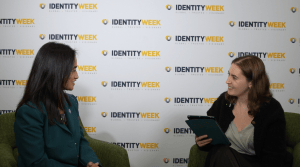
Multimodal solutions have become an increasingly prevelant feature of the mobile biometric apps being implemented by banks and other financial institutions in 2015.It seems that banks have realized that customers need multiple login options to tackle the complexity of real world conditions – preferably none of which include clunky passwords or tokens.As a specialist in mobile biometric authentication, Hoyos Labs has had a strong emphasis on these multimodal aspects.The firm has launched face, fingerprints and voice solutions in recent years that are aimed at securing identities on the go, and last month Dutch online shop Koopjesdrogisterij deployed one such solution for online purchases.Planet Biometrics took time out to speak with Hoyos Labs CEO Hector Hoyos about mobility, multimodal hardware versus software, and other biometric trends.What do you see as the most important trends driving biometrics adoption in 2016?Right now, we see two major trends in biometrics adoption:1 – Mobility has transformed biometrics so that you no longer need expensive hardware. Instead, you can use sensors on smartphones. People can use their smartphones for facial recognition through scanning their fingers or thumbprints or using them for voice recognition. A seamless user experience, combined with the ubiquity of smartphone technology, will drive rapid adoption rates in 2016.2 – Financial services and the healthcare industry have a driving need to curb fraud, particularly identity theft. We will see rapid adoption in both of these sectors, thanks to the first biometric back-end server that will work with any biometric front-end, allowing enterprises to implement an end-to-end identity assertion solution.Do you expect growth in take-up of biometrics in the financial sector to spread into new segments?Absolutely – As I mentioned, we are already seeing huge demand in the healthcare industry. In the United States alone, there is over $272 billion in fraud. There are now solutions that use biometrics as the front-end that can prove you are who you say you are. This is true authentication without relying on ID cards, PINs or passwords that are easy to hack. Authenticating a person, his / her location and time of the authentication are huge breakthroughs within the industry. Hoyos Labs' technology can do all of these things.How was 2015 for Hoyos Labs? What were some of your major achievements?2015 was a great year for Hoyos Labs. The Institute of Electrical and Electronics Engineers (IEEE) adopted the Biometrics Open Protocol Standard (BOPS) as the global standard for identity and authentication on the Internet and mobile devices. We contributed this research to the IEEE.We also released a new biometric solution called 4Finger ID, which allows you to easily scan four of your fingers using the rear-facing camera on your smartphone. This is far more reliable than facial or voice recognition.Lastly, we built the first biometric tablet, Biometrics Advanced Tactical Intelligence Device (BATID), for the healthcare industry. This is a low-cost, portable device that provides critical authentication solutions for hospitals, pharmacies and other medical facilities to identify patients who may not have a smartphone or who may be unconscious.Do you think that more biometric-specific hardware will be added to smart devices in 2016?We don't believe that the future is about hardware. We think that the future of biometrics is software-based. The mobile device industry must accelerate the pace of innovation to equip devices with Near Infrared LEDs (NIR LEDs) to enable iris acquisition on smartphones for the mass market. That will be a game-changer.Standards-wise, what do you see as the most important issue facing the industry in 2016?The biometric industry needs a common back-end server infrastructure to standardize on so that each company that develops front-end biometric acquisition methods, and the enterprises that deploy them, have a standard that protects and secures someone's biometric data. Unlike usernames and passwords that can be changed if comprised, a person's unique biometric cannot. Hoyos Labs developed BOPS, and the IEEE has ratified it to become the standard to ensure that the biometric industry can continue to advance and prosper without the liability of this data being comprised.




Recent Articles
- The ID Talk Podcast explores: What does document security look like as we move rapidly towards digital tech?

- UK begins rollout of contactless eGates across airport network
- EY treats IAM as a holistic business capability
- New initiative registered for sovereign European AI domains
- Arkion wins most innovative start-up!




Recent Video