Faculties across the MIT say they are “deeply aligned” with the birth and adoption of AI to support hands-on education, which will produce classes of graduates who are unafraid of the strides AI is making in the workplace.
Undergraduate students studying on MIT programmes have the opportunity for hands-on research in MIT labs. Unfortunately what the university’s Committee Report reveals, surveying teachers and students, is that some MIT labs have considered replacing Undergraduate students entirely with AI agents. Drawing strong shared views from their experiences, it concludes that AI’s authority in the education system needs to be carefully monitored and managed.
Those students who use AI frequently have reported having “strongly mixed feelings” from curiosity and inspiration, to anxiety and “AI refusal”.
Moreover, unregulated AI use can be directly linked to disruption affecting MIT’s students, increasing their isolation and eroding the “traditional” social contract between teachers and students.
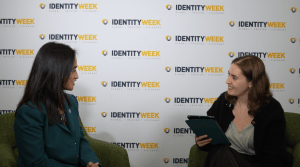
Dr. Tina P. Srivastava, who spoke at Identity Week America, told IdentityWeek.net that unfortunately the Committee found that some faculties want to go further with AI to replace students.
With faculties embedding AI detection software into their teaching practices which can be unreliable, this compounds some students fears of being wrongly accused of cheating.
Commissioned in January 2026 by MIT leadership, the committee spent five months investigating generative AI’s role across campus to propose policies and actionable recommendations.
When it comes to proof of human, and identifying an AI agent, biometrics are critical, says Dr. Srivastava. Her presentation earlier this month, taking place in Washington DC, opened up around the ethical questions including around revocability, and why we should prioritise community, human relationships, and hands-on apprenticeship over pure speed and efficiency.
“…Once you’ve proven you’re human, such as through privacy-preserving biometrics, you increasingly want to hand a scoped slice of that authority to an agent – but not your whole identity”.
Dr. Srivastava highlights the challenge of lab policies considering replacing students with AI agents and notes the need to delegate a “scoped slice of authority” to an agent without handing over full identity.
Dr. Srivastava emphasises that after proving humanity, individuals will want to hand a “scoped slice” of authority to AI agents. Identity Week Europe 2027 features discussions on Identity and Access Management, delegated authority models, and machine-to-machine identity, establishing protocols for how human identities can securely govern and constrain the actions of autonomous AI agents.