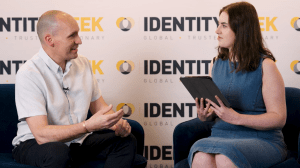
Attention is turning towards the next edition of Europe’s leading identity event, where themes around AI-driven fraud, adaptive authentication and digital trust are expected to dominate the agenda once again.
At last year’s event, Mustafa Hasnin delivered a keynote focused on the economics of fraud and the growing importance of identity as a strategic business asset rather than simply a compliance requirement.
Speaking during an interview at the close of Day 2, Hasnin described identity as “infrastructure for trust,” arguing that organisations investing continuously in identity verification and customer protection will gain a long-term competitive advantage in increasingly hostile digital environments.
These themes now appear firmly embedded within the programme for Identity Week Europe 2026, which returns to Amsterdam this June.
The 2026 agenda features multiple sessions focused on fraud resilience, KYC modernisation, AI-enabled security and adaptive identity frameworks, areas that closely align with Hasnin’s 2025 keynote.
Among the highlighted sessions are:
- “Identity in the Crosshairs: Fighting Fraud Beyond 2026”
- “KYC Authentication”
- “Build a Stronger Business with Identity as the Foundation”
- Panels exploring non-human identities, AI agents and behavioural biometrics
The growing emphasis on artificial intelligence reflects the rapidly evolving threat landscape described by Hasnin during his interview.
While many organisations continue to view generative AI primarily as a security threat, Hasnin argued that defensive AI capabilities are now essential for modern fraud prevention. He warned that attackers are already using AI aggressively to create deepfakes, synthetic identities and fraudulent onboarding documents.
“At the moment, we are not winning this battle against attackers if we don’t use AI,” he explained, emphasising that defensive AI systems are increasingly being used to detect phishing attempts, suspicious behavioural patterns and fraudulent communications at scale.
A major focus of his discussion was the need for risk-based identity verification across digital marketplaces. Rather than applying the same onboarding and authentication process universally, Hasnin advocated tailoring verification requirements to the specific risks of each user journey.
For example, casually browsing a property platform may require minimal friction, while listing goods on peer-to-peer marketplaces should trigger stronger KYC and authentication controls.
Drawing on his background in financial services, Hasnin also pointed to banking as a model for broader digital commerce, particularly around:
- early-stage KYC onboarding,
- adaptive “step-up” and “step-down” authentication,
- and dynamic privilege management based on risk signals.
Identity Week Europe 2026 is expected to bring together thousands of identity, cybersecurity and fraud prevention professionals from across banking, government, e-commerce and technology sectors.
The event will take place at RAI Amsterdam on 9–10 June 2026 and is expected to feature more than 300 speakers discussing the future of digital identity, authentication, biometrics and fraud prevention.
If you’re exploring risk-based identity verification across your digital marketplaces and services, then you will be eligible for our FREE all-access passes to attend in June. Get your pass now.