-
Public trust in government identity platforms depends heavily on privacy. How does Login.gov enforce strict data minimisation?
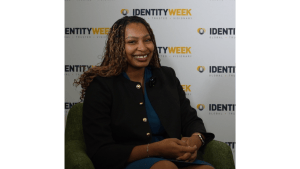
“It is a responsibility we don’t take lightly and we think that privacy and security go hand in hand and reinforce each other. The less unnecessary data we collect, the easier it is to reduce risk that is created. At Login.gov, we focus on collecting the least amount of data that is required in order to complete the specific transaction. And we guide ourselves by NIST standards and work with our partners to determine what it is actually the attributes that they need from the user in order for us to convert them to that digital identity. So we’re mindful and conscious of that, and it’s a responsibility that we evaluate and improve on every day as well.”
-
Login.gov uses 1:1 live selfie-to-ID matching and explicitly avoids 1:n surveillance. How do you communicate this distinction to the public to prevent drop-offs during onboarding?
“It’s really important for us to speak plainly and directly to the user, not only in our government documents like our Privacy Act statement, but also within the application as well. We also make sure to have a lot of help center articles, extensive help center articles for them to self-serve and educate themselves as well. They are also help from our contact support agents that are trained to educate the customer and answer their questions. We’ve also done a lot of discovery with user research that, for example, tells us if we tell to the user, ‘We need this information to let us know that you are who you say you are and protect you from identity theft,’ that’s something that they are comfortable with and understand then what we do and why we do what we do in order to provide them with a digital identity [and] system to digital services.”
- With Login.gov expanding support to U.S. Passports and preparing for Mobile Driver’s Licenses aligned with NIST 800-63 Rev 4, how will wallet-based, cryptographically signed mDLs change the remote onboarding workflow over the next few years?
“It changes it in a way that it reduces the friction of document capture that we see a lot. The difficulty with having the right camera device, the right lighting, the right quality of the document – that goes away because at that point the user has an issued mDL. It also helps us elevate security standards by leveraging the cryptographic component of the mDL that is checked against the verifier/the issuing party, and for mDL specifically, it’s the DMV, right? Their jurisdictions. In time, it will improve how quickly a user goes to verification. Over time, we will see that happen. But for us, it’s not about shifting users to just one ID type, but also making sure that we provide different options for them.”
- On meeting users where they are, passport cards, and growing mDL adoption.
“For passport cards, we were looking at what the user was doing. We look and listen to them through the data – they were attempting to go through our system with passport cards. So we worked with the Department of State to expand their API to allow us to accept passport cards, because we had launched passport books back in July of last year as an ID as an evidence type. But with mDL, we’re also leading the user towards new technology while providing them all the options they need. So pushing them forward, but also meeting them where they are as well. (mDL adoption) is increasing across the states… I think it’s like 22 states and territories. My home territory, Puerto Rico, is one of them, so I’m proudly a carrier of an mDL. And we have, I think the last numbers I saw, about 76% of the U.S. population is going to be in a state which will have access to an mDL in the next few years. So there’s a lot of states planning on adopting mDL soon.”
Registration now open for Identity Week America 2027, where the agenda will hit on the advancements of mDLs for identification and easier onboarding, privacy statements from federal bodies, and zero surveillance.