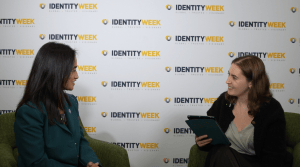
Insights from Huber Berger, Chief Project Technology Officer at Veriff, who spoke to us at Identity Week Europe 2025.
Compliance to Performance
Historically, industries like fintech have approached identity verification primarily through a compliance lens. However, Berger said organisations are now prioritising performance, particularly in response to the growing cost of fraud.
The challenge lies in maximising fraud detection accuracy while maintaining a seamless user experience. For regulated sectors, this means evolving beyond rigid compliance frameworks toward more adaptive, risk-based models.
Tailored Identity Across Industries
Different industries require fundamentally different approaches to identity. While financial services demand stringent Know Your Customer (KYC) processes, unregulated sectors such as marketplaces and social platforms prioritise flexibility and user experience.
For example, gig economy platforms and dating apps face unique challenges. In these environments, identity is less about official documentation and more about authenticity and trust, often driven by biometric verification and behavioural signals rather than government-issued IDs.
The Rise of Digital Identity Ecosystems
Digital wallets and government-backed identity schemes are rapidly gaining traction. Berger described Veriff’s approach as “polyglot”, capable of integrating multiple identity systems across regions and use cases.
However, fragmentation presents a major challenge. The proliferation of different digital identity schemes increases integration complexity for businesses. Veriff positions itself as a unifying layer, simplifying access to these systems while maintaining high standards of accuracy and automation.
Berger said we should aim for identity systems based not solely on government credentials, but on a combination of user data and online behaviour, creating a form of “trust capital” that transcends borders.
AI – A Double-Edged Sword
On the one hand, fraudsters are leveraging technologies like deepfakes and AI-powered attacks, whilst companies are using AI to strengthen fraud detection and streamline verification processes.
This is where liveness detection can be useful to confirm whether a user is physically present and real, and this is becoming a critical defence against AI-driven impersonation.