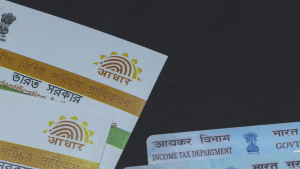
Several years after the UK's coalition government scrapped plans for ID cards, members of the House of Lords have been debating the issues associated with ID documentation, fraud and terrorism.Lord Campbell Savours, who led the debate, said: 'The issue of identity cards is the issue in British politics that refuses to go away. It is not that it is the unique preserve of any political party. Identity cards have wide support in both Houses of Parliament, across the political divide and in the electorate."He added: "Germany has built a secure system with a reputation for impenetrability based on a range of biometrics. The system leads the way in Europe, and if they can do it, we can do itߪThe purposes of a national identity card fall under four headings: to reduce fraud; to establish entitlement to services; to provide security assurance; and to check identity more generally."Speaking in favour of the motion, Lord Harris of Haringey said: "I am quite clear that identity cards would not have been a magic bullet against terrorism, or serious or organised crime, but it would have been as assistanceߪAt the moment, when we have to verify our identity, we are required to produce a passport or driving license. I do not have a driving licence, simply a passport, which I have to find and not lose. You are then required to produce a recent utility bill, sometimes two, at a time when the utilities are trying to get us all to manage our accounts online, so we do not have that piece of paper which signifies our name and address. In my case, at least one utility has my name wrong. It is mis-spelt. That does not matter in the provision of the service concerned, but it is a pain in the neck when I am trying to prove I am who I think I am."The debate raised concerns such as costs and civil liberties. However, several peers also argued that there are costs of fraud associated with doing nothing. Lord Harris of Haringey also argued: "Let us be clear that if the state does not take on this function, others will."Lib Dem peer Lord Scriven challenged those in favour of an ID scheme: "Can any Lords point to a direct correlation between a reduction in crime levels and citizens having ID cards?" He also reminded the Lords that recent terrorist attacks in Jakarta and Paris took place in countries where citizens have ID cards, and argued that in cases of benefit and taxation fraud, most people do no lie about their identity, but lie about their financial circumstances. Also against ID cards was Lord Oates, who argued: "There are many reasons, both of principle and practicality, why a national identity card scheme is a very bad idea. The most important issue of principle is that it would fundamentally alter the relationship between the state and its citizens. It violates the fundamental traditions of Britain that have kept our liberties safe. For the first time in our peacetime history, the state would have the power to demand information from every person in the land, not in order for them to travel or gain an internationally recognised travel document-a passport-or to prove that they have complied with the driving test, or even to gain access to a public service, but simply because they exist. For the first time in peacetime, every person in this country would be compelled to attend a designated place, to be fingerprinted and to have their biometric data taken from them. On every occasion that a citizen moved house the state would have the right to know. More than that, every citizen would be under a duty to inform the state, and a penalty of severe fines, if they moved their premises."Lord Desai pointed to the experience in India with the Aadhaar system. "The fact that [ID card holders] have very easily provable identity has not only liberated a lot of people, but reduced costs across both public and private transactions."Home Office Minister Lord Bates said: "Identity cards as described – and certainly as introduced by the previous Labour Government – failed essential tests in that they were expensive. I realise that the sums talked about – £85 million – may not in the current scheme of things seem large, but back in times of austerity in 2010 they were very significant. Where something was not delivering the expected benefits, the decision was made to use that funding elsewhere."




Recent Articles
- Bumble data leaked to dark web site

- Vietnam grasps cybersecurity directive, Philippines drops ID verification plans
- UIDAI launches Aadhaar app, enables digital ID storage in Google Wallet
- De La Rue’s strategic Canadian deal to finally win British passports tender
- Meet with Goldman Sachs, Huawei, the European Commission, The World Bank and more!



Recent Video
- New non-profit trade association of HAND will standardise global talent ID
- No cards, no phones: J.P. Morgan’s biometric revolution in payments
- Anthony Vidiano on building the future of access management
- Charisma Check wins 2025 Start-Up Pitching Competition, advancing identity verification and background checks for dating app users
- How to protect one billion Amazon customers: Lessons from continuous risk assessments