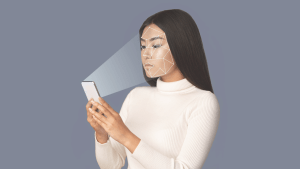
A digital authentication startup called UnifyID has launched with plans to target passwords with a combination of machine learning, behavioural biometrics and continuous authentication.In a statement revealing their launch, the firm notes that their solution revolves around a “holistic implicit authentication platform”.”With our implicit authentication system, we can identify the human behind the device and give a confidence level that they are who they say they are. UnifyID also does continuous authentication, which means we can detect when changes happen and automatically challenge or log out the user”.”The basic idea is to be yourself, and there is enough that is unique about you that it is possible to authenticate you implicitly; that is, without you having to make any explicit action.”The UnifyID product consists of an app that runs on devices as well as a cloud service. The local apps periodically collect sensor data from the local device, process it, and communicate with the cloud service.The solution uses a variety of data sources all of which are implicit in nature, requiring no conscious action by the user. On mobile devices, its make use of a variety of sensors including GPS, accelerometer, gyroscope, magnetometer, barometer, ambient light, and wifi and Bluetooth signal telemetries.On the PC and laptop side, it looks at factors such as keystroke timing (not what you type, but how you type), mouse/touchpad movements (finger length affects swipe/scroll arc), as well as looking at Wifi and Bluetooth telemetry data from not only your devices,All sensor data is processed locally and a small stream of extracted features is sent to UnifyID's cloud-based machine learning system, which automatically finds correlations between factors and discovers what makes you unique.While many of these factors are extremely noisy and possess a high false-positive rate when examined individually, the firm notes that on the backend, it can combine these noisy factors to extract a highly accurate “confidence level” via the use of proprietary machine learning algorithms to figure out if it's really you or someone else using a given device.”Best of all, each user always has direct control over which implicit factors are used, and they can even purge the data on command. This is the first time ever that users will have full control and management over their biometric/behavioural data derived from connected sensors.”Our system is highly accurate. By utilizing just four available sensors, our system already achieves five nines (99.999%) of accuracy, which is far more secure and convenient than the status quo of login credentials used today. We can achieve high accuracy even after a small amount of data. For example, our gait detection algorithms can identify a user after collecting four seconds of walking data.”The firm's first product, which is being made available in private beta this week at TechCrunch Disrupt in San Francisco, is a Chrome browser extension with an iOS mobile app. Users can install the browser extension and the mobile app, and it quickly begins to learn about you and your behaviour.Then, as users visit websites, instead of asking for a user name and password, it logs you in using your Unify ID, so long as it's confident it's you. If there's a question (and there is more likely to be a question when you first start using the product), it will send a challenge to your phone such as asking for your Touch ID.



Recent Articles
- Belgian Centre for Cybersecurity reports significant phishing scams

- Thales and Georgia State of Driver Services deliver enrolment kiosks to issue credentials
- EU Commission’s first Interoperability Report and roadmap to a seamless digital EU
- 150 speakers announced for the world’s largest identity event!
- Procivis to deliver Lithuanian EU digital identity wallet sandbox




Recent Video
- Stephen Chapman praises UK passport system, calls for international standards to support national systems
- Michelle Wilson on building Blue Cavalry Solutions and advancing interoperable digital ID
- “We are looking at how to make biometrics quicker”: Hannes Lember discusses Estonia’s contactless biometric pilot and border innovation
- New non-profit trade association of HAND will standardise global talent ID
- No cards, no phones: J.P. Morgan’s biometric revolution in payments