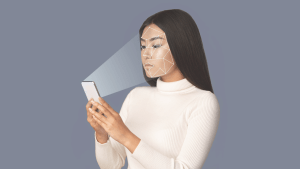
Simeio Solutions has announced the release of Simeio Identity Vault. The mobile and web application offering is designed for modern identity proofing approaches, which reduces the effort and cost associated with traditional identity proofing and demonstrates the strength of assurance in an identity by leveraging government IDs and facial recognition. Simeio Identity Vault enables users to prove their identity to organizations in a privacy-preserving manner making transactions easy and secure."Simeio Identity Vault provides a solution to current legacy identity proofing methodologies," said Shawn Keve, Chief Revenue Officer at Simeio Solutions. "With a multi-pronged approach, businesses and governments can digitally transform by verifying their customers', employees', and all stakeholders' identities based upon information that we can collect and confirm."Simeio Identity Vault provides the following capabilities:Fundamental Identity Proofing: Initiate verification using an official government form of identification (e.g., a driver's license), uses facial recognition to establish authenticity, then validate using a secondary form of identity (e.g., information from utility provider or telecom carrier)Progressively build a Digital ID card: Save verified claims onto a digital wallet (IOS or Android), and allow for peer attestationsEasy Sharing of Claims: Ability to share verified information about an individual to an organization in a privacy-preserving mannerTrueID Score with Machine Learning: Evaluate Identity Assurance Level (IAL) and generate a granular trust score that adapts as the identity footprint growsSecure Data Storage & Transmission: Cryptographically secure, verified claims on the users' mobile deviceAccording to Gartner1, "Security and risk management (SRM) leaders with a responsibility for fraud prevention and secure payment, as well as those responsible for underwriting functions or authentication strategy must invest in new technologies now to bolster or replace legacy identity proofing tools and processes. Accept that any sense of security that comes from using highly compromised static data as a means of corroborating identity is a dangerous illusion."




Recent Articles
- Belgian Centre for Cybersecurity reports significant phishing scams

- Thales and Georgia State of Driver Services deliver enrolment kiosks to issue credentials
- EU Commission’s first Interoperability Report and roadmap to a seamless digital EU
- 150 speakers announced for the world’s largest identity event!
- Procivis to deliver Lithuanian EU digital identity wallet sandbox




Recent Video
- Stephen Chapman praises UK passport system, calls for international standards to support national systems
- Michelle Wilson on building Blue Cavalry Solutions and advancing interoperable digital ID
- “We are looking at how to make biometrics quicker”: Hannes Lember discusses Estonia’s contactless biometric pilot and border innovation
- New non-profit trade association of HAND will standardise global talent ID
- No cards, no phones: J.P. Morgan’s biometric revolution in payments