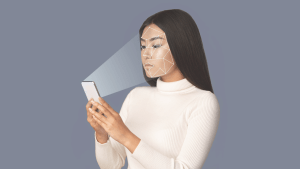
A team of scientists from South Africa say that the way we touch our smartphones could be as powerful an authentication method as any attached fingerprint sensor.Christina J. Kroeze from the University of Pretoria and the University of South Africa's Katherine M. Malan have published a study into authentication based on how humans interact with touchscreens.Touch features were analysed in terms of the data provided for authentication, using attributes such as finger pressure, location of touch interaction and the shape of the finger.The team found that not only was touch data sufficiently distinct between users to be used in authentication without disrupting normal touch interaction, the raw touch data was also more effective in authentication than aggregated gesture data.In the study, touch data was collected from 30 participants to investigate whether the data was distinct enough to be used for biometric classification.The participants were then directed to perform six tasks on a smartphone that represented real world interaction with a phone while their touch data was being recorded. Participants were asked to perform six different general tasks on the smartphone representing normal usage of the device.The dataset for each user consisted of 30 files representing the known user and different combinations of unknown users for both the raw touch and gesture data. For each of these files, the information gain of each attribute with respect to the user's classification was calculated.In conclusion, the team says that It was shown that these touch features could be measured continuously, enabling authentication at all times and creating a constant barrier between the smartphone and attackers.”This study has shown that continuous touch biometrics can be successfully implemented on smartphones and that such a system would be both secure and usable: secure in the sense that the additional authentication of touch biometrics is continually running in the background and does not require the user to act in a secure way; and usable in the sense that there is no additional cognitive load placed on users to remember particular PINs or patterns.”



Recent Articles
- Belgian Centre for Cybersecurity reports significant phishing scams

- Thales and Georgia State of Driver Services deliver enrolment kiosks to issue credentials
- EU Commission’s first Interoperability Report and roadmap to a seamless digital EU
- 150 speakers announced for the world’s largest identity event!
- Procivis to deliver Lithuanian EU digital identity wallet sandbox



Recent Video
- Stephen Chapman praises UK passport system, calls for international standards to support national systems
- Michelle Wilson on building Blue Cavalry Solutions and advancing interoperable digital ID
- “We are looking at how to make biometrics quicker”: Hannes Lember discusses Estonia’s contactless biometric pilot and border innovation
- New non-profit trade association of HAND will standardise global talent ID
- No cards, no phones: J.P. Morgan’s biometric revolution in payments