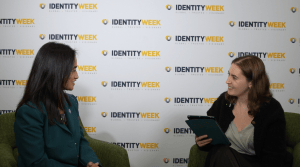
Having spent decades independently testing and evaluating biometric systems, SAIC has mitigated a lot of challenges with AI for deployment in real-world environments. When Jerry Tipton, Executive Director, Integrated Security Technologies and Programs, at SAIC sat down with us at the recent Identity Week America 2026, he lent his knowledge to explain how systems don’t always perform at the same level as vendors expect during scenario testing with real people compared with the development phase.
He says, “when companies design products, they design with a great deal of precision creating to get perfect answers and performance”. However, many leaders in government in particular still have big misconceptions around the technology as its performance outside of trials needs to be continuously reviewed. Our conversation turned to discussing the AI divide.
Whilst we expect AI systems to be getting more advanced, which they are, they can also fail spectacularly and pose challenges to enrolment or onboarding, which can be blamed on the user. These system faults can be supported in SAIC’s critical research. Whilst biases are successfully mitigated by vendors, reports like this help vendors to make necessary improvements.
Tipton’s shares his valuable insight that we should adopt a realistic judgement about AI, and maintain a strong relationship between humans and AI as algorithms and tools for decision making advance. He states it is critical to keep human-in-the-loop biometrics in the age of agentic AI for trust and acceptance, driving world-wide adoption. To ensure adoption, human context is also important to allow the AI to make responsible decisions. Errors and systemic risk require humans in the loop.