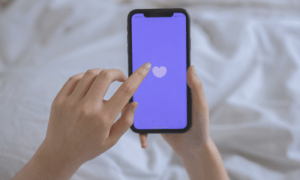
Smart phones already track your location, act as you bank card, hold your tickets and arrange your work and social life, but Apple are looking to add another element – having it act as your 'proof of identity'.The United States Patent and Trademark Office have made public that Apple plans to hold information that can be used to establish the identity of the user. The new patent (number: 20180225662), first filed in March 2018, states that a mobile device can be used to authenticate the owner's identity as well as their country of origin using RFID chips inside, acting as secure storage. This can be used to act as any form of government ID such as a passport, identity card or drivers license. The device can then be used to authenticate the user via a password or some sort of biometric check.With smart phones already able to download boarding passes and be used for the whole check in process using them as passports seems like the next logical step should the patent turn into reality. However, while users would need no longer worry about losing their passport there would be even more concern over losing their phone or their phone's battery dying.Furthermore, gaining international support may present a problem as well as the high cost of implementing new machines at airports. For it to be effective both the departure and destination airports would need the compatible customs and immigration procedures otherwise travellers would still need to carry their physical passports. There is also a security risk with mobile phones holding such sensitive personal information.However, AppleInsider editors, Victor Marks and Mike Wuerthele, who broke the story, were keen to point out that this is still very much in the development stage and for the time being only the data path and process have been revealed.If this project does become more than just a patent, then it is likely that there will be concern over handing over more of our personal identities to gain shorter queues at the airport and whether private companies can be trusted with such data. – Nicholas Clark Bryan




Recent Articles
- Bumble data leaked to dark web site

- Vietnam grasps cybersecurity directive, Philippines drops ID verification plans
- UIDAI launches Aadhaar app, enables digital ID storage in Google Wallet
- De La Rue’s strategic Canadian deal to finally win British passports tender
- Meet with Goldman Sachs, Huawei, the European Commission, The World Bank and more!


Recent Video
- New non-profit trade association of HAND will standardise global talent ID
- No cards, no phones: J.P. Morgan’s biometric revolution in payments
- Anthony Vidiano on building the future of access management
- Charisma Check wins 2025 Start-Up Pitching Competition, advancing identity verification and background checks for dating app users
- How to protect one billion Amazon customers: Lessons from continuous risk assessments