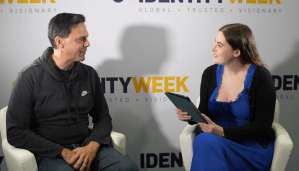
Lorena Roman, who is Strategic Partnerships and Ecosystem Analyst at Rafeisen Bank International, discusses more collaboration between financial institutions, regulators and tech providers to provision identity, wallets and services.
“Digital identity wallets are a big consideration for the banking sector as well” and “of course, you get a better feeling of it when you meet people in person” she said.
Digital identity are an asset to banks as a verifier for banking activity, e-commerce, retail and other financial services that require data on the individual requesting an access. The financial sector is embracing the acceptance of digital wallets, and even exploring bank-owned wallets, from the snowball effect of eIDAS mandating that all European member states should facilitate easy and secure transactions through using digital ID.
How, would you describe collaboration between financial institutions, regulators and tech providers with provisioning identity, wallets and services?
“There’s definitely more collaboration than before” in order to consider how to consume and issue credentials inside the wallets. This requires views to be exchanged on what aspects of identity should be integrated, what customer expectations are for wallets, onboarding, and biometrics.
She too said the acceptance of wallets is mainly driven by the regulator, with eIDAS 2.0 mandating banks to accept the wallets for strong customer authentication. The European Commission now wants to expand on eIDAS wallets for legal persons and citizens, to create a wallet for B2B and B2Banks to encourage European Competitiveness.
Beyond the regulatory checks, there should be more different sectors collaborating to scale up mainstream wallets.