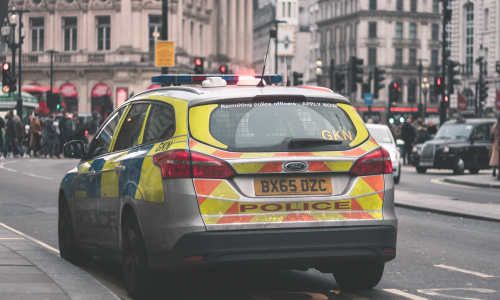
With an increased police watch across England and Wales, and 13,000 more officers deployed in communities by 2029, the Home office is also rolling out 10 new live facial recognition vans to seven forces in the country.
The Met and South Wales police forces have seen success with facial recognition capabilities to ensure the right people committing crimes are arrested.
A policing minister has praised the MET’s use of LFR in a suburb of London and indicated that the government is consulting on what safeguards and oversight are needed to instil public confidence in LFR technology.
In turn, this will help the government shape a legal framework for its use, which fully understands how LFR matches faces from a live profile and compared against police watchlists and databases on past offenders to determine matches. Police currently use LFR in a limited way to match potential offenders on a watchlist, rather than stopping and screening every individual.
South Wales Police is a leader in facial recognition which has led to multiple arrests.
Chief Superintendent Tim Morgan, of South Wales Police, said:
“Our priority is to keep the public safe and this technology continues to help us achieve that. We understand the concerns which are raised about the use of live facial recognition technology and we use any new technology ethically and spend time and effort making sure it’s deployed in line with all legislation and guidance”.
The 10 new units will be deployed to forces in Greater Manchester, West Yorkshire, Bedfordshire, Surrey and Sussex, and Thames Valley and Hampshire.
The mobile units will be distributed in the coming weeks, with the rollout being coordinated by the National Police Chiefs Council and South Wales Police.
Identity Week Europe 2026 will be the key gathering to address the challenges of live facial recognition, raising important debates about privacy, ethics, and regulation. The event will bring together government leaders, technology innovators, and civil society voices to explore how biometric technologies can be deployed responsibly, balancing public safety with individual rights on our sessions covering “Biometrics at the borders”, “Biometric capabilities”, and “Beyond the face, finger, and iris”. This makes Identity Week Europe a crucial forum for shaping the future of identity in an era of powerful new capabilities.